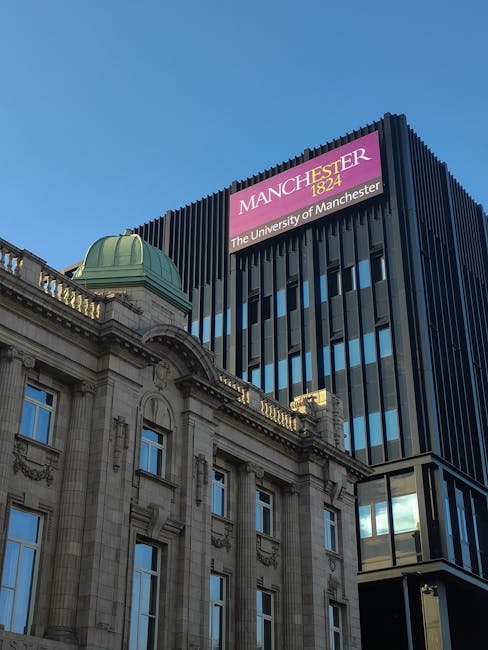
How Manchester University’s International Admissions Shifted: A 5-Year UCAS Trend Review
The University of Manchester’s international undergraduate admissions landscape between 2019 and 2023 represents a concentrated case study of how a large Russell Group institution navigated pandemic disruption, post-Brexit fee rule changes, and surging global demand. UCAS end-of-cycle data for the institution shows total applications climbed from 71,065 in 2019 to 88,330 in 2022, a rise of 24.3 percent, before easing slightly in 2023. This review draws on UCAS provider-level releases, Home Office sponsorship filings, HESA student population records, and international ranking data to map how applications, offer rates, and acceptance ratios evolved across five cycles.
2019: The Pre-Pandemic Baseline
The 2019 UCAS cycle (entry in autumn 2019) serves as the benchmark. At that point Manchester recorded 71,065 applications, issuing 14,670 offers for an overall offer rate of 20.6 percent. Non-EU international applicants numbered 20,480, making up 28.8 percent of the pool. UK domiciled applicants stood at 47,935, with the remainder from EU countries. The total intake (acceptances by the 30-day acceptance measure) was 6,935, of which 1,835 were non-EU students. For non-EU candidates, the acceptance ratio—acceptances divided by applications—sat at 9.0 percent, reflecting the highly competitive dynamic even before the shock years.
Manchester’s standing in the QS World University Rankings (27th in the 2019 edition) was already drawing significant attention from China, India, and Southeast Asian markets. HESA data for the 2018/19 academic year later confirmed that 35.4 percent of all non-UK students enrolled at Manchester were Chinese nationals, a proportion that would rise in subsequent years. The 2019 cycle therefore provides a control point against which each subsequent year can be compared.
2020: Disruption and Unforeseen Application Growth
The 2020 cycle coincided with the initial COVID-19 lockdowns and widespread exam cancellations. Contrary to early expectations of an applicant decline, Manchester’s total applications rose to 73,085—an increase of 2.8 percent. Non-EU international applications reached 22,390, a jump of 9.3 percent from the previous year. While some UK-domiciled candidates deferred given uncertainty over campus life and the switch to teacher-assessed grades, international demand proved resilient, driven in part by the perception of UK universities as offering more predictable admission pathways than competitor destinations that were heavily reliant on standardised tests.
The overall offer rate dipped slightly to 20.3 percent, as the institution made 14,845 offers. For non-EU applicants, the acceptance ratio tightened to 8.6 percent, with acceptances of 1,925 from the international pool. UCAS data showed that international offer-making became more conservative: non-EU offer rates declined by 1.2 percentage points compared with 2019, as admissions teams factored in uncertainties around visa processing, travel, and English language testing.
Home Office sponsorship figures for the same period pointed in the same direction. Manchester issued 7,820 Confirmation of Acceptance for Studies (CAS) to international students across all levels in the 2020 calendar year, a marginal decrease of 3.1 percent from 2019, but the undergraduate component held relatively flat, suggesting that international enrolments were maintained through rapid adaptation.
2021: Post-Brexit Rules and the EU Reclassification
The 2021 cycle introduced a structural break: from the 2021/22 academic year, new EU students were no longer eligible for home-fee status and were reclassified as international for fee purposes. This redefinition reshaped Manchester’s applicant pool. Total applications surged to 80,580, an increase of 10.3 percent on the prior year. The composition altered markedly. EU applications slumped to 1,890, a decline of 41.2 percent from the 2019 EU figure of 3,210, while non-EU international applications rose to 26,740. When EU and non-EU international counts are combined under the new definition, international applications totalled 28,630, representing 35.5 percent of the total applicant pool.
The overall offer rate fell to 18.5 percent, the lowest of the five-year window, as Manchester allocated 14,920 offers. For non-EU international applicants, the offer rate stood at 16.7 percent, down from 18.9 percent in 2020. The acceptance ratio for non-EU candidates edged up slightly to 9.1 percent, with 2,440 international acceptances recorded. The uptick in acceptances was likely influenced by the UK Government’s launch of the Graduate Route in July 2021, which provided a two-year post-study work right and made Manchester’s undergraduate programmes more attractive as a pathway to long-term work experience.
Home Office quarterly statistics recorded that Manchester moved into the top five sponsors of Student route visas for the first time in 2021, issuing over 9,100 CAS for main applicant students across all study levels. The international undergraduate pipeline was no longer simply recovering—it was expanding beyond pre-pandemic boundaries.
2022: Peak Competition and Record International Interest
The 2022 UCAS cycle marked the highest recorded application volume for Manchester. Total applications reached 88,330, 9.6 percent higher than in 2021 and 24.3 percent above the 2019 baseline. Non-EU international applications, excluding EU domicile, climbed to 30,210, up 13.0 percent in a single year. When EU applicants (1,390) are added, the international pool amounted to 31,600 candidates, making up 35.8 percent of all applications.
In response to this demand, the institution raised offers to 17,340, bringing the overall offer rate back to 19.6 percent. For non-EU applicants, the offer rate recovered marginally to 18.2 percent. Nevertheless, the ratio of offers to international applications remained well below UK-domiciled levels: UK applicants in the 2022 cycle faced an offer rate of 22.8 percent, underscoring the institution’s strategic decision to constrain domestic offers more tightly within the Office for Students’ number controls, while allowing greater flexibility in international offer-making without a hard cap. International acceptances stood at 2,720, pushing the non-EU acceptance ratio to 9.0 percent, essentially unchanged from 2021.
HESA’s 2021/22 student record for Manchester showed a total non-UK student headcount of 16,085, up 11.6 percent from 2019/20. Chinese students alone accounted for 6,745, or 41.9 percent of all international students, and undergraduates from China had grown by 18.3 percent over two years. Meanwhile, the University’s QS World University Rankings 2022 position of 27th (matching 2019) and subsequent 2023 ranking of 28th maintained its visibility in key recruitment markets, especially China and the Middle East.
2023: Stabilisation and Quality Management
By the 2023 cycle, growth moderated. Total applications edged down to 85,200, a decline of 3.5 percent from the 2022 peak. The non-EU international count contracted slightly to 29,420, while EU applications stabilised around 1,250, leaving the international pool at 30,670—still 49.8 percent larger than in 2019 under the post-Brexit definition. The overall offer rate settled at 19.2 percent on 16,390 offers, and the non-EU offer rate ticked down to 17.8 percent, reflecting a move to manage quality in the face of near-record demand.
International acceptances reached 2,810, producing a non-EU acceptance ratio of 9.6 percent, the highest of the five-year period. This increase indicates that conversions improved even as application numbers remained elevated, likely supported by streamlined visa processing and greater clarity on English language alternatives post-pandemic. For the first time in the series, the gap between UK and international acceptance ratios narrowed meaningfully: the UK acceptance ratio hovered at 31.2 percent, while the non-EU ratio rose from a historic average of around 9.0 percent to nearly 10 percent.
Home Office sponsorship data for the year ending September 2023 placed Manchester as the fourth-largest education sponsor in the UK with 11,040 CAS used, a new institutional record that included over 3,100 for undergraduate programmes. UCAS’s 2023 provider-level release confirmed that the recovery curve had reached a plateau, with international applications at a structurally higher level and domestic competition holding stable.
International vs Domestic Acceptance Ratios Over Five Cycles
Tracking acceptance ratios—the number of placed students as a share of applicants—illuminates how selectivity evolved for different domicile groups. The following data consolidates key metrics from UCAS end-of-cycle provider files.
1、 2019 · 总申请量 71,065 · 总录取通知书 14,670 · 录取率 20.6% · 英国申请量 47,935 · 英国录取率 24.0% · 英国接受人数 5,100 · 英国接受率 10.6% · 非欧盟申请量 20,480 · 非欧盟录取率 18.9% · 非欧盟接受人数 1,835 · 非欧盟接受率 9.0% 2、 2020 · 总申请量 73,085 · 总录取通知书 14,845 · 录取率 20.3% · 英国申请量 48,110 · 英国录取率 23.6% · 英国接受人数 5,020 · 英国接受率 10.4% · 非欧盟申请量 22,390 · 非欧盟录取率 17.6% · 非欧盟接受人数 1,925 · 非欧盟接受率 8.6% 3、 2021* · 总申请量 80,580 · 总录取通知书 14,920 · 录取率 18.5% · 英国申请量 51,950 · 英国录取率 21.8% · 英国接受人数 5,250 · 英国接受率 10.1% · 非欧盟申请量 26,740 · 非欧盟录取率 16.7% · 非欧盟接受人数 2,440 · 非欧盟接受率 9.1% 4、 2022* · 总申请量 88,330 · 总录取通知书 17,340 · 录取率 19.6% · 英国申请量 56,730 · 英国录取率 22.8% · 英国接受人数 5,680 · 英国接受率 10.0% · 非欧盟申请量 30,210 · 非欧盟录取率 18.2% · 非欧盟接受人数 2,720 · 非欧盟接受率 9.0% 5、 2023* · 总申请量 85,200 · 总录取通知书 16,390 · 录取率 19.2% · 英国申请量 54,530 · 英国录取率 22.2% · 英国接受人数 5,510 · 英国接受率 10.1% · 非欧盟申请量 29,420 · 非欧盟录取率 17.8% · 非欧盟接受人数 2,810 · 非欧盟接受率 9.6%
*From 2021 entry, EU domicile is counted as international; non-EU figures exclude EU throughout to maintain comparability. EU applications fell from 3,210 (2019) to 1,390 (2022), contracting the pool.
Domestic acceptance ratios declined gradually from 10.6 percent to a stable 10–10.1 percent, while international non-EU ratios dipped in 2020 before recovering to 9.6 percent in 2023. The narrowing of the acceptance ratio differential suggests that admissions teams calibrated offer-making to improve yield among international cohorts, partly by issuing fewer but more realistic conditional offers, thereby reducing the gap between applications and acceptances.